
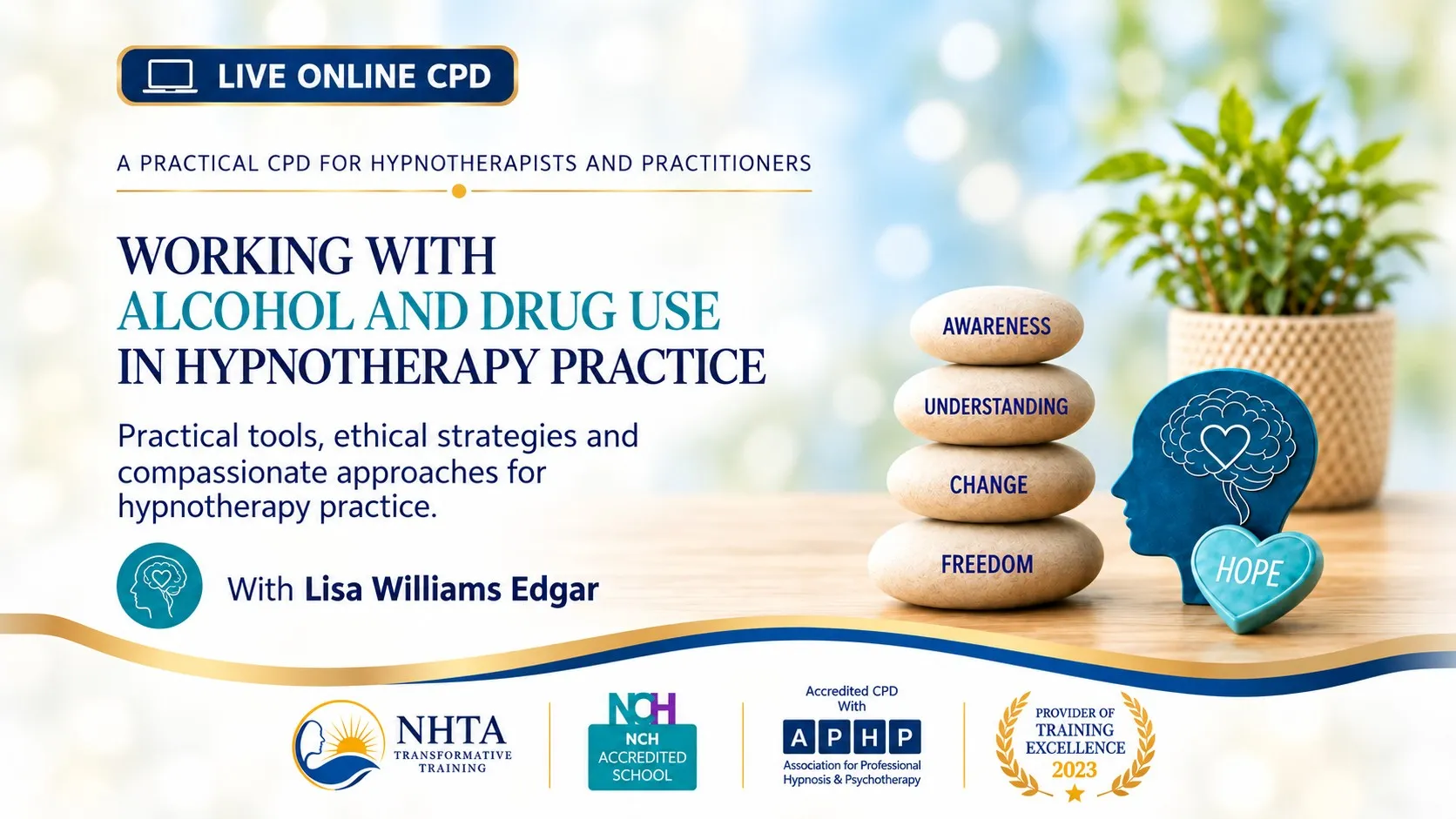

Working with Alcohol and Drug Use in Hypnotherapy Practice
Feel more confident supporting clients with alcohol and drug use. This practical CPD explores addiction, dependence, recognising risks and the safe, ethical use of Solution Focused and Integrative Hypnotherapy. Includes useful techniques, clinical guidance and comprehensive practitioner resources.
- Date
- Wednesday 13 January 2027
- Time
- 09:30–14:30 (Europe/London)
- Delivery
- Online (Zoom)
9 places left
Working with Alcohol and Drug Use in Hypnotherapy Practice
A Practical CPD for Solution Focused and Integrative Hypnotherapists
How Confident Do You Feel When a Client Discloses Alcohol or Drug Use?
Alcohol and drug use can be challenging areas for hypnotherapists to navigate.
What happens when a client tells you they're drinking more than they would like? Or that drug use has become part of their routine? Perhaps they are using alcohol to relax, relying on substances to cope with difficult emotions or struggling to change a pattern they know is affecting their life.
How do you know when hypnotherapy may help, what questions to ask and when additional or specialist support is needed?
Join Lisa Williams Edgar for a practical, compassionate and thought-provoking CPD designed to help hypnotherapists work more confidently and appropriately when alcohol or drug use becomes part of a client's presenting difficulties.
This workshop explores the psychology behind addiction and dependence, the importance of recognising potential risks and how Solution Focused and Integrative Hypnotherapy can support positive change within safe, ethical professional boundaries.
Rather than focusing solely on the problem, we'll explore how to help clients develop greater awareness, strengthen motivation, recognise alternative choices and build more helpful patterns for the future.
What Will You Learn?
Understanding alcohol use, drug use, addiction and physical dependence, including why addiction and dependence are not interchangeable terms.
How habits, emotional coping, reward, relief and repetition can contribute to continued substance use.
Recognising the difference between occasional use, potentially harmful patterns and presentations that may indicate dependence or require specialist assessment.
What to explore during the initial consultation and how to ask sensitive questions without judgement.
Recognising red flags, withdrawal risks and when medical or specialist referral is essential.
Understanding ethical responsibilities, safeguarding, confidentiality, informed consent and professional boundaries.
Working within your training, qualifications, competence and professional insurance.
Using Solution Focused questioning to explore motivation, strengths, exceptions and preferred outcomes.
How hypnosis and integrative therapeutic approaches may support emotional regulation, coping, confidence and behavioural change where clinically appropriate.
Working therapeutically with urges, routines, automatic responses and learned associations.
Using positive future rehearsal and personalised therapeutic language to support healthier choices.
Structuring sessions and adapting techniques to the needs and circumstances of individual clients.
Understanding the Person Behind the Pattern
Alcohol and drug use rarely exist in isolation.
For some people, substance use may have become associated with relaxation, confidence, social situations or emotional relief. For others, it may be linked with stress, anxiety, established routines or attempts to escape uncomfortable feelings.
Understanding these patterns helps us approach clients with curiosity and compassion rather than judgement.
Throughout this workshop, we'll explore the relationship between thoughts, emotions, habits and behaviour, and how hypnotherapy may form part of an appropriate approach to supporting positive change.
Bringing Hypnotherapy into the Work
This is not simply a workshop about recognising addiction or knowing when to refer.
It is also about understanding how to use your existing skills as a hypnotherapist when it is appropriate and safe to do so.
You'll explore practical Solution Focused and Integrative approaches, including therapeutic questioning, hypnosis, positive suggestion, future-focused work and techniques designed to help clients develop alternative responses to familiar triggers and patterns.
We'll consider how to adapt our language, structure sessions and support clients in identifying their own reasons for change.
The emphasis throughout is on practical application, professional confidence and individualised client work.
Where more complex substance-use difficulties or dependence are present, we'll also consider when hypnotherapy may appropriately complement, rather than replace, specialist treatment and ongoing recovery support.
Ethical Practice, Professional Boundaries and Knowing When to Refer
Working confidently also means recognising our professional responsibilities and the limits of our competence.
This is not a workshop about diagnosing addiction, managing detoxification, providing rehabilitation or working outside professional competence.
It does not qualify attendees as addiction specialists, substance-misuse practitioners or rehabilitation professionals.
Alcohol and drug dependence can involve serious physical and psychological risks. In particular, abruptly reducing or stopping alcohol when someone is physically dependent can cause dangerous withdrawal symptoms, including seizures. Withdrawal from certain drugs can also require medical supervision.
Throughout the workshop, we'll explore how to recognise concerning patterns and warning signs, understand when further assessment or specialist support is needed and make appropriate referrals.
We'll also consider the ethical responsibilities involved in obtaining informed consent, maintaining confidentiality, safeguarding clients and working within our professional training, experience and insurance.
Importantly, not every client who discloses alcohol or drug use will automatically require referral. The key is understanding the individual circumstances, recognising potential risks and making appropriate professional decisions.
Our role as hypnotherapists is not to diagnose, supervise withdrawal or replace specialist addiction services. It is to use our therapeutic knowledge and skills safely, ethically and appropriately, helping clients work towards positive change wherever this falls within our professional competence.
Resources You Can Take Back into Practice
You'll receive:
A pre-workshop workbook to help you prepare for the training.
A comprehensive post-workshop resource pack containing practical guidance, therapeutic tools, useful language, techniques and session considerations.
Opportunities for discussion, questions and practical application.
A CPD certificate of attendance.
These resources are designed to help you return to the material and develop your confidence long after the workshop has finished.
Who Is This Workshop For?
Qualified hypnotherapists, student hypnotherapists and practitioners wishing to develop a clearer understanding of alcohol and drug use within Solution Focused and Integrative Hypnotherapy practice.
Whether you already encounter these presentations or would simply like to feel better prepared should a client disclose substance use, this workshop offers valuable clinical understanding and practical approaches.
The training is intended to develop existing professional knowledge and skills. Practitioners remain responsible for working within their individual competence, supervision arrangements and professional scope.
Your Trainer
Lisa Williams Edgar is the Founder of New Horizon Training Academy, a Clinical Integrative and Solution Focused Hypnotherapist, Senior Lecturer, Trainer and Registered Supervisor.
Lisa brings professional experience, practical clinical knowledge and a warm, supportive teaching style to her workshops.
Her training is designed to help practitioners develop confidence, strengthen their clinical understanding and leave with resources they can genuinely use in their own practice.
A Note About Other Dependencies
We will also briefly consider gambling and other compulsive behaviours where similar patterns of reward, relief and repetition are relevant.
However, the main clinical focus of this workshop is alcohol and drug use.
Smoking and vaping cessation are covered separately within New Horizon Training Academy's dedicated CPD.
Workshop Information
Live Online via Zoom
Duration: 9.30am–2.30pm (UK time)
Investment: £85 per person
APHP Accredited CPD
Leave feeling better informed, more confident in your professional boundaries and better equipped to use Solution Focused and Integrative Hypnotherapy safely, ethically and appropriately when clients present with alcohol or drug-related difficulties.
Other CPD you might pair with this
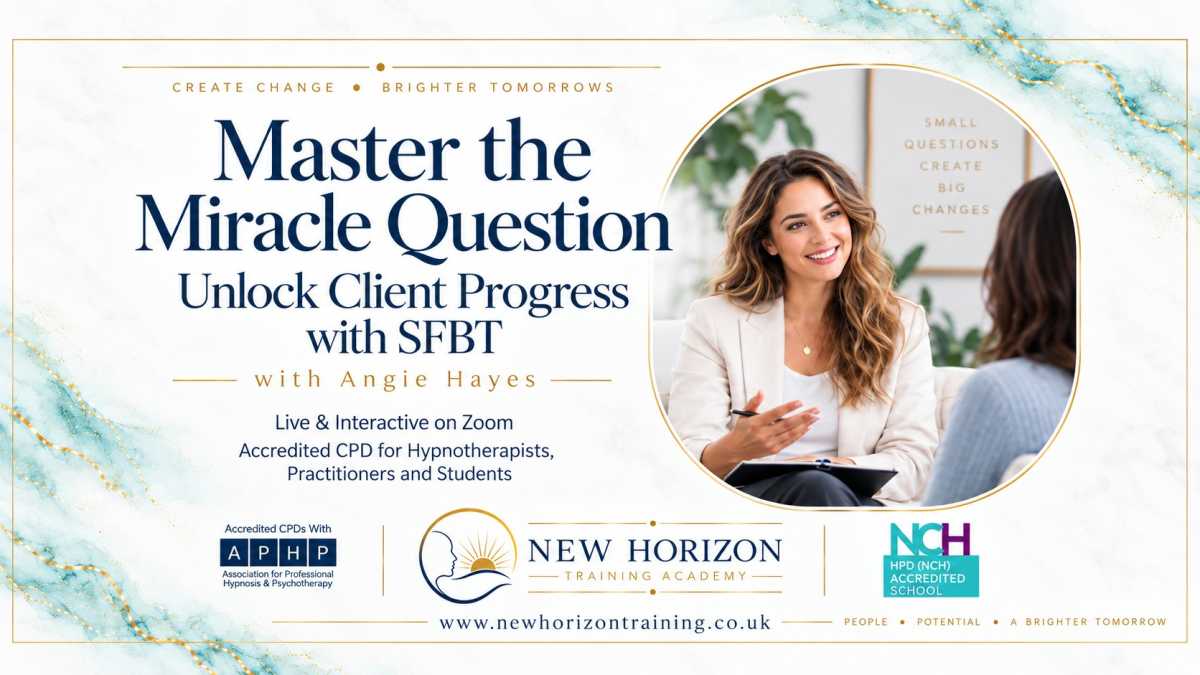 Miracle Question / SFBT
Mastering the Miracle Question with SFBT
When a client says “I don’t know”, what do you do next? Join Angie Hayes for a practical CPD on the Miracle Question and solution focused questioning to help unlock clearer answers, deeper detail and real client progress.
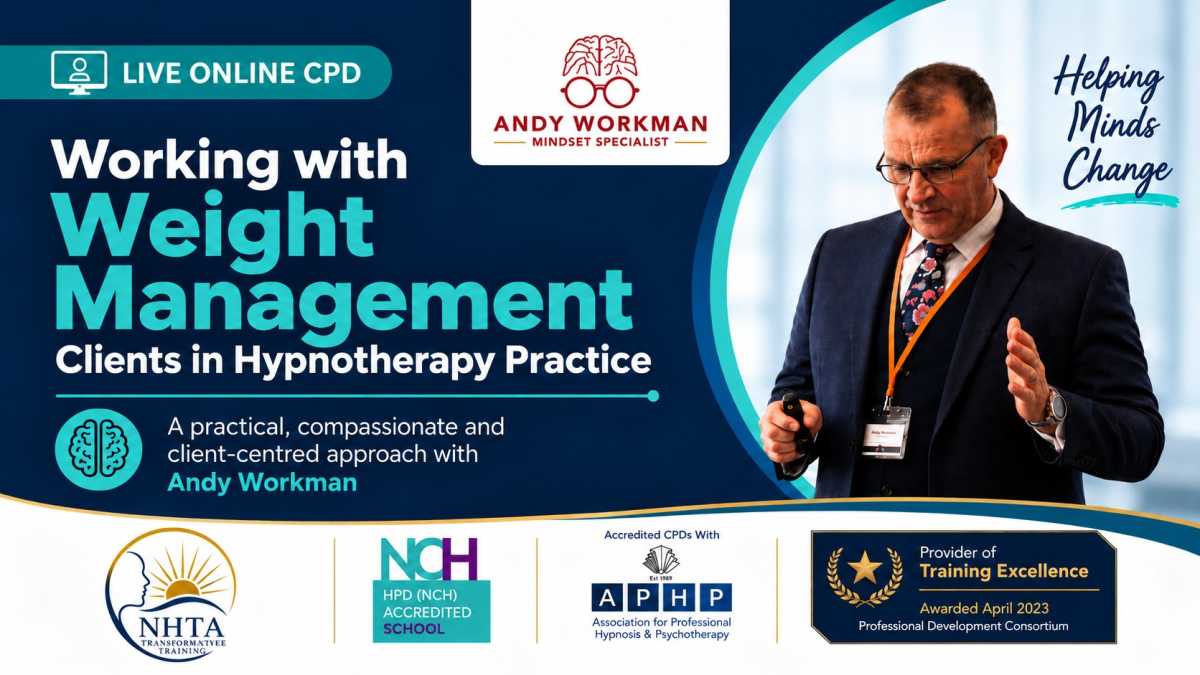 Weight management
Working with Weight Management Clients
Practical CPD with Andy Workman on mindset, behaviour change, emotional eating and subconscious approaches — includes a supporting booklet of scripts and session structure.
 Bereavement & loss
Bereavement and Loss in Hypnotherapy Practice
Compassionate CPD for solution-focused and integrative hypnotherapists supporting clients through bereavement, anticipatory grief and significant life loss.

Working with Alcohol and Drug Use in Hypnotherapy Practice
13 Jan 2027 · 09:30–14:30 · Online (Zoom). If you would like to know more before booking, just get in touch.